
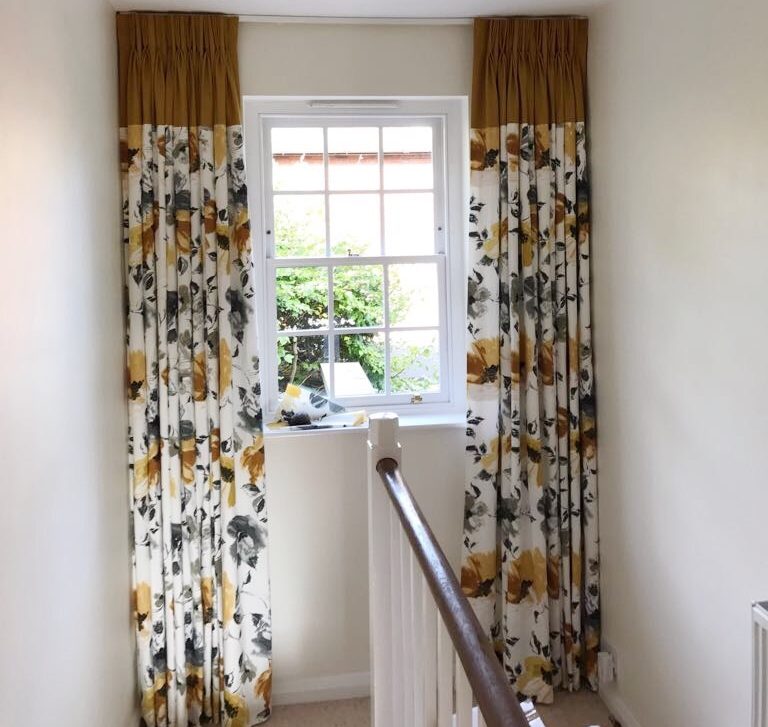
Floor-to-Ceiling Curtains: Why They Work and How to Get Them Right
We have always been fans of floor-to-ceiling curtains. Long before they became a fixture on every interiors mood board, we were fitting them in homes across Hertfordshire and watching the transformation they bring to a room. The effect is hard to describe until you see it in person: the ceiling feels higher, the room feels wider, and the whole space takes on a quality that no other window treatment quite replicates.
But floor-to-ceiling curtains are not simply about aesthetics. Get the heading, fabric, and lining right and they become one of the most practical window treatments you can choose. Get them wrong and they can look heavy, flat, or out of place. This guide covers everything you need to think about before you order.
What makes floor-to-ceiling curtains different from standard curtains? The key distinction is where the track or pole is mounted. Rather than sitting just above the window frame, the track is fixed at or very close to the ceiling, so the curtain runs the full height of the wall. The result is a continuous fall of fabric from the ceiling to the floor, creating a sense of architectural height even in rooms that do not have it naturally.
The practical benefits are just as compelling as the look
Floor-to-ceiling curtains are not purely decorative. Here is what they actually do for a room:
- They make ceilings feel taller. Hanging fabric from ceiling to floor draws the eye upward and creates the impression of height, even in a standard-height room.
- They improve insulation. A full-height curtain covers far more of the wall and window area than a standard drop. This is particularly valuable on older windows where heat loss is significant. Our thermal-lined floor-to-ceiling curtains can reduce heat loss by up to 30%.
- They block light more effectively. Because the curtain starts at the ceiling rather than the window head, there is no gap for light to bleed in at the top. For bedrooms and media rooms, this makes a real difference.
- They conceal more than windows. Full-height curtains are an elegant way to hide a cluttered alcove, a storage area, or even a doorway you would rather not draw attention to.
- They divide a room without walls. In open-plan spaces, ceiling-mounted curtains can create a soft boundary between a living area and a home office, or between a sleeping space and a dressing area.
Which Rooms Suit Them Best
Floor-to-ceiling curtains work in almost any room, but some spaces benefit more than others.
Living rooms are the most popular choice. A full-height curtain behind a sofa or across a patio door creates a strong focal point and anchors the room. In a living room with high ceilings, the effect is dramatic; in a room with standard ceilings, it adds the impression of height without any structural work.
Bedrooms benefit enormously from the blackout properties of a full-height lined curtain. There is no gap at the top for early morning light to creep in, which makes a genuine difference to sleep quality.
Open-plan kitchen and dining areas are increasingly popular in Hertfordshire homes, and floor-to-ceiling curtains offer a practical way to zone the space. A ceiling-mounted track across part of the room creates a visual separation that can be drawn or opened depending on the occasion.
Which Rooms Suit Them Best
Floor-to-ceiling curtains work in almost any room, but some spaces benefit more than others.
Living rooms are the most popular choice. A full-height curtain behind a sofa or across a patio door creates a strong focal point and anchors the room. In a living room with high ceilings, the effect is dramatic; in a room with standard ceilings, it adds the impression of height without any structural work.
Bedrooms benefit enormously from the blackout properties of a full-height lined curtain. There is no gap at the top for early morning light to creep in, which makes a genuine difference to sleep quality.
Open-plan kitchen and dining areas are increasingly popular in Hertfordshire homes, and floor-to-ceiling curtains offer a practical way to zone the space. A ceiling-mounted track across part of the room creates a visual separation that can be drawn or opened depending on the occasion.
Lining: Do Not Overlook It
With floor-to-ceiling curtains, the lining choice matters even more than it does with a standard drop. You have more fabric, more wall coverage, and more potential for both heat retention and light control. The right lining makes the most of all three.
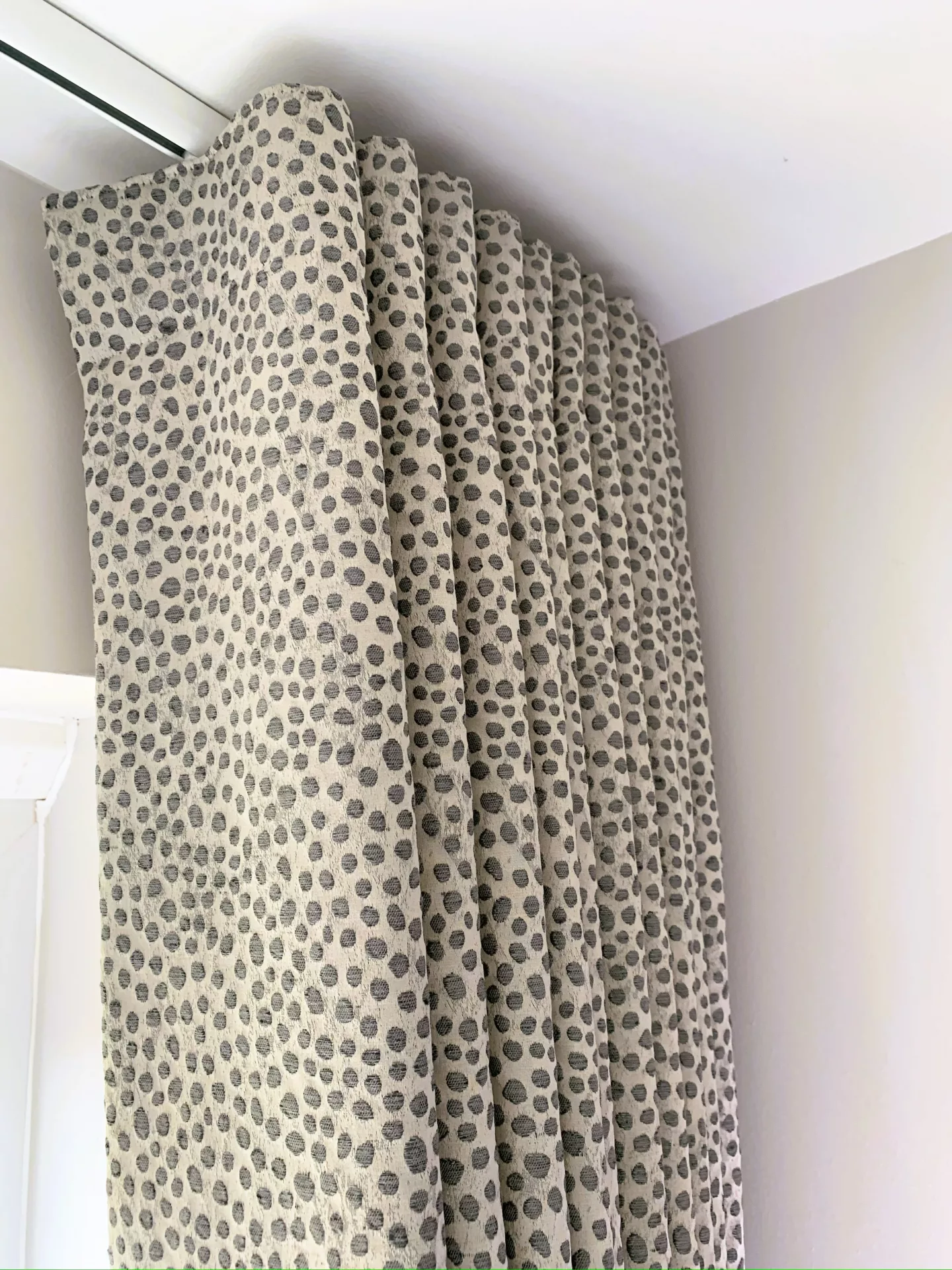
One thing worth noting: if you are ordering wave curtains, we always recommend a softer blackout lining rather than a standard blackout fabric. Standard blackout can be quite stiff, which works against the natural, flowing fold of a wave heading.
For more detail on all our lining options, visit our made-to-measure curtains page.
Come and See the Fabric Books
Choosing the right fabric for floor-to-ceiling curtains is genuinely difficult to do from a screen. Colours shift under different lighting, textures only reveal themselves in person, and the weight of a fabric tells you a great deal about how it will hang. This is why we always recommend starting in the showroom.
We hold an extensive range of fabric books from leading designers at our Welwyn Garden City showroom, covering everything from sheer voiles and lightweight linens to rich velvets and structured woven fabrics. Our team will help you narrow down the options based on your room, your heading choice, and your practical requirements.
If you would prefer to see fabrics in your own home, we also offer a free home survey. We bring curated samples to you, so you can see exactly how they look in your lighting before you commit.
Visit our showroom at 13 Shoplands, Welwyn Garden City, or get in touch to arrange a home visit. We cover Welwyn Garden City, St Albans, Harpenden, Hertford, Hatfield, Potters Bar, Stevenage, and the surrounding areas.
Author: Amanda Gamlin, Director at Unidrape Blinds & Interiors
Question: Are floor-to-ceiling curtains suitable for small rooms?
Answer:Yes. Floor-to-ceiling curtains can make a small room feel taller and more generous by drawing the eye upward. The key is choosing a heading and fabric that do not feel too heavy for the space, so the curtain adds height without overwhelming the room.
Question: Which heading works best for floor-to-ceiling curtains?
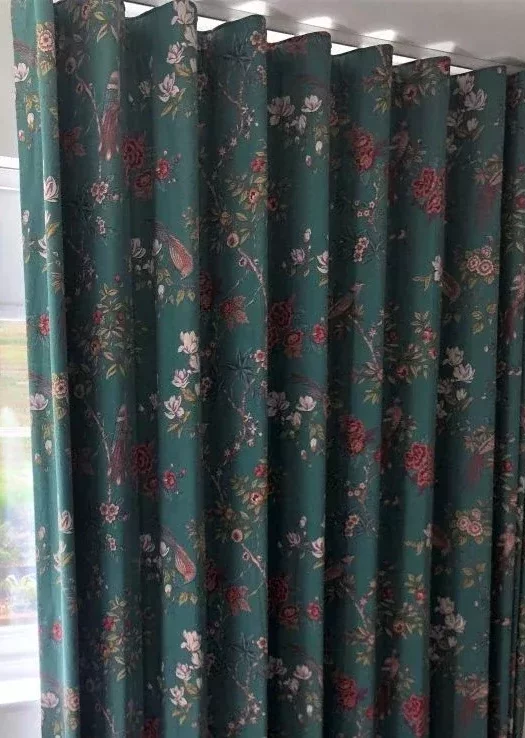
Answer:Wave headings are often the best choice for a modern, full-height look because they hang in smooth, even folds. Pencil pleat and pinch pleat can also work well depending on the style of the room, the fabric chosen and how much stack space you have.
Question: Do floor-to-ceiling curtains help with insulation?
Answer:They can. Because they cover more of the wall and window area than shorter curtains, full-height curtains help reduce draughts and improve heat retention. A thermal or interlined option usually gives the best result, especially on older windows.
Question: What should I consider before ordering floor-to-ceiling curtains?
Answer:Check the ceiling fixing, stack space, fabric weight and overall measurement first. These curtains need to be made to exact dimensions, so professional measurement and installation are important if you want them to hang properly and work as intended.
Question: Why should I visit the showroom before choosing fabric?
Answer:Fabric books are much easier to assess in person. We have a large library of sample books in our showroom, so it’s worth visiting to see the full range, and then we can book a home visit bringing the shortlist or order you cut samples. Light, texture and colour all change depending on the room, so visiting the showroom lets you compare samples properly and get advice on the best heading, lining and fabric for your space.